Evidence
Simulation
Decision

biosphere by ICT Biomas: translational intelligence for research, development and scientific decision-making

/// Scroll to explore

Translational intelligence for research, development and scientific decisions.

An infrastructure that links evidence, experts, simulation, experiment and technology readiness in a single traceable flow.

  • Chained layers
    07
  • Specialist agents
    11
  • Technology categories
    08
Problem thesisbiosphere by ICT Biomas

The challenge is not only to produce science. It is to turn evidence, hypotheses, results and decisions into an institutional system for learning and technology development.

Explore the platform

Instead of fragmented projects, the institution runs a living portfolio of hypotheses, evidence, experiments, risks, decisions and opportunities.

01BioSphere

An operational and scientific layer for what the institution already has.

Evidence, data, people, tools and experiments, connected in one continuous translational process.

BioSphere by ICT Biomas is a translational intelligence platform for research, development and scientific decision-making.

Institutional definition

It structures R&D projects, integrates internal and external evidence, coordinates specialist analyses under human supervision, connects in silico tools and organizes how technologies advance by evidence, risk, cost, time and readiness.

Value proposition

An infrastructure that turns research into clearer decisions, more traceable projects and technologies better prepared for validation, development, investment and transfer.
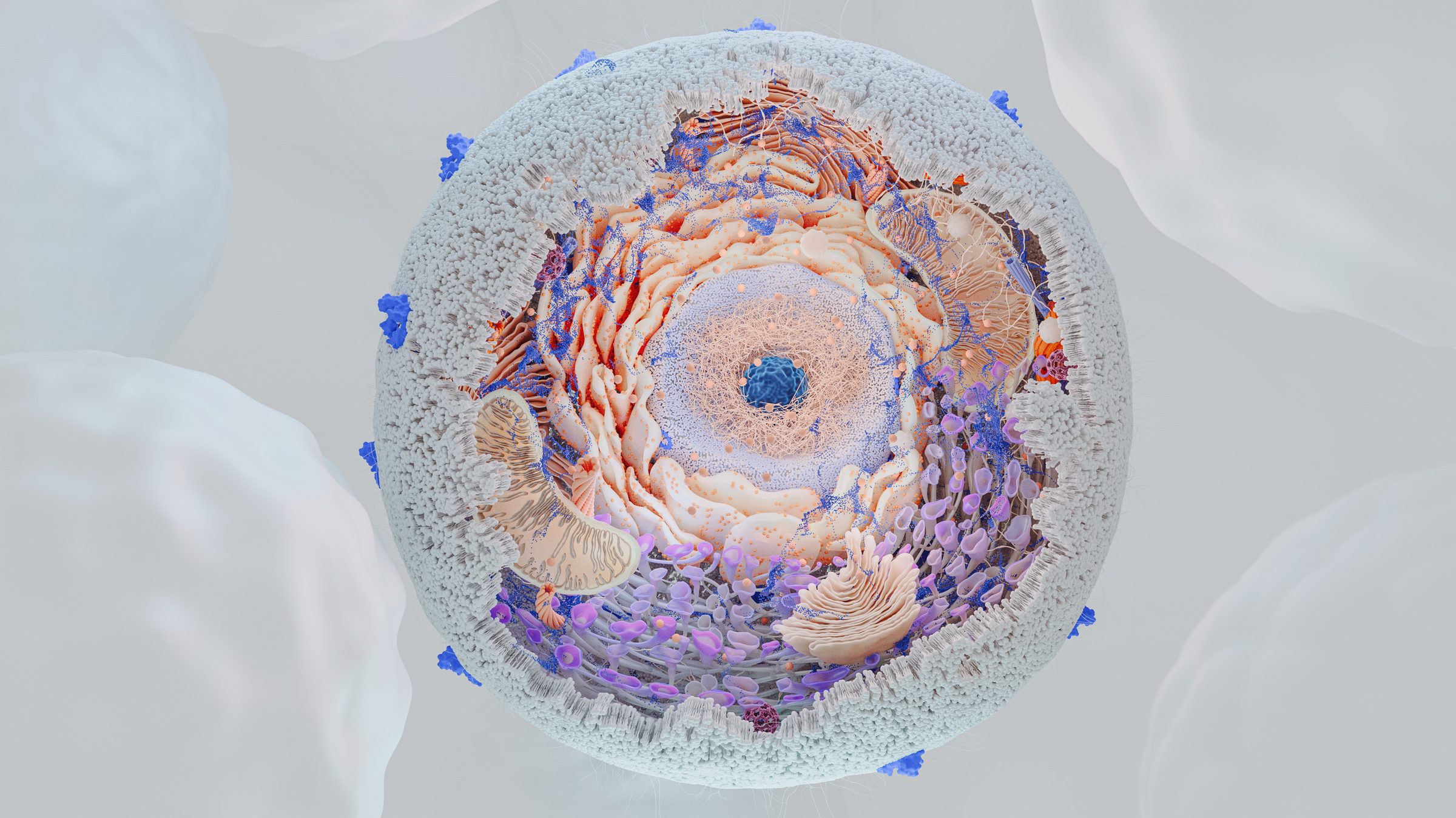
Cut-away render of a cell showing the nucleus, reticulum and Golgi apparatus Cell · cut-away
See how biological complexity becomes actionable insight.
Drugs and new moleculesPeptides, proteins and biologicsFormulationsDiagnostics and biomarkersDevices and biomaterialsDigital healthAdvanced therapiesProcesses and manufacturing
02The opportunity

A common layer for R&D.

BioSphere sits between research, management, development, regulation and technology transfer.

01Inputs

Everything the institution already produces and consults

What lives today in papers, spreadsheets, reports and partner systems enters a single project environment.

Internal dataExternal databasesExpertsSimulationsExperiments
02Structure

Structured, traceable evidence

Every item keeps its origin, identifier and date. Every conclusion points to the passage, data or result that supports it.

  • Origin, identifier and date
  • Linked passage or data
  • Reviewable conclusion
03Output

Hypotheses, gaps and decisions

Gaps become research questions and experiments. Decisions are recorded with an owner, a date and a rationale.

GOAdvance
PIVOTReformulate
PAUSEPause
STOPEnd

Expected benefits

Expected benefits
09gains

They appear once evidence, decision and experiment start pointing at each other.

01

Time

Less time to locate and interpret relevant evidence

02

Consistency

Project documentation in one standard

03

Memory

The institution's scientific and decision memory preserved

04

Communication

Researchers, leadership, partners and managers talking about the same object

05

Comparison

Different technologies assessed with the same criteria

06

Planning

Experiments chosen by uncertainty, value of information, cost and feasibility

07

Visibility

Risks, dependencies, gaps and milestones in plain sight

08

Readiness

Ability to demonstrate TRL for grants, partners and transfer

09

Traceability

Auditable results for continuity and collaboration

03Trust principles

AI supports, but never replaces, scientific responsibility.

Every relevant conclusion walks this path, and the last two steps require an accountable person.

  1. 01Source
  2. 02Extracted data
  3. 03Interpretation
  4. 04Hypothesis
  5. 05Simulation
  6. 06Experiment
  7. 07Human reviewAccountable person
  8. 08DecisionAccountable person

■ Human owner, date, rationale and approval on record

04The platform

Seven chained layers and one specialist module.

From the project environment to TRL, plus a first module for drug discovery. Open each layer to see what it delivers.

The layer that sustains the institution's daily operation. Everything that follows rests on it.

Expected outcome

The institution registers and runs a complete project, controls access, keeps history and restores earlier versions of documents and decisions.

What it delivers
  1. 01Management of organizations, units, users and access profiles
  2. 02Registry of projects, technologies, hypotheses, teams and partners
  3. 03Repository of papers, protocols, reports, attachments, notes and results
  4. 04History of versions, changes, comments, reviews and decisions
  5. 05Confidential data separated by project, user, partner and organization
  6. 06Backup, recovery, export and portability
  7. 07Usage control for APIs, compute, integrations and costs
  8. 08Audit trails for access, editing, approval and export

Connects the institution's projects to external scientific, technological, clinical and regulatory knowledge.

Provenance rules

Origin, identifier, access date and license on every record. Public, licensed, confidential and sensitive data each have distinct access.

What it delivers
  1. 01Scientific literature: papers, reviews, identifiers, citations and authorized text
  2. 02Clinical trials: interventions, criteria, outcomes, status, design and results
  3. 03Chemical and biological databases: compounds, targets, proteins, mechanisms and activity data
  4. 04Patents and technology intelligence: holders, families, competition and opportunities
  5. 05Regulatory sources: requirements by product, stage and jurisdiction
  6. 06Internal data: protocols, reports, experimental results and institutional documents

Turns heterogeneous documents and data into comparable information.

Expected outcome

The team can tell apart what was demonstrated, what is interpretation and what still needs testing.

What it delivers
  1. 01Structured extraction of population, model, intervention, comparator, outcomes and results
  2. 02Distinction between computational, in vitro, animal, human and post-market evidence
  3. 03Identification of methodological limitations, biases, contradictions and negative results
  4. 04A link from each conclusion to the passage, data or record that supports it
  5. 05Flags for missing data and insufficient evidence
  6. 06Research questions generated from the gaps
  7. 07Comparison across studies and bodies of evidence
  8. 08Reviewable scientific syntheses

Eleven discipline agents and a scientific coordinator that distributes tasks, preserves disagreements and escalates critical doubts to human review.

Expected outcome

The scientific committee receives a traceable synthesis, with disagreements preserved and critical doubts escalated to human review.

What it delivers
  1. 01Receives the project context and the research question
  2. 02Distributes tasks to the relevant agents
  3. 03Defines which sources and evidence are needed
  4. 04Consolidates analyses without erasing disagreements
  5. 05Ranks claims by degree of confidence
  6. 06Produces a traceable synthesis for the scientific committee

A controlled gateway to in silico tools, not a generic promise of universal simulation.

Contracting principle

Access to a piece of software, technical integration with it and scientific validation of its results are three different deliverables. Each has its own scope, cost, timeline and acceptance criteria.

What it delivers
  1. 01Preparation, checking and standardization of input data
  2. 02Molecular docking, molecular dynamics and structural modeling
  3. 03Property prediction, ADMET, PK/PD and safety profiles as the project requires
  4. 04Genetics, bioinformatics, expression and omics data
  5. 05Job submission, tracking and result retrieval
  6. 06Records of parameters, versions, files, tools and resources used
  7. 07Spend control, quotas and approval before high-cost jobs
  8. 08Comparison with controls and available experimental data

Turns hypotheses into experimental plans and results into updated decisions.

Critical limit

The platform supports those responsible for the study. It does not replace ethical, regulatory, medical or statistical approval. Changes to trials follow the formal workflows.

What it delivers
  1. 01Preclinical: experiments prioritized by value of information, cost and feasibility
  2. 02Registry of CROs, laboratories and owners
  3. 03Computational prediction confronted with the result
  4. 04Clinical support: comparison of trials, synopses, protocols, population and outcomes
  5. 05Feasibility and biostatistics with explicit assumptions
Flow
01Scientific hypothesis
02Experimental plan
03Controls and criteria
04Execution
05Result
06Comparison with prediction
07Human review
08Decision

Technology readiness as a decision based on evidence, gaps and milestones, not an isolated subjective rating.

Expected outcome

Scientific leadership sees and justifies the stage of each technology, its dependencies and the next investments.

What it delivers
  1. 01Proposed current TRL and the evidence behind the rating
  2. 02Critical gaps to the next level
  3. 03Experimental and documentary milestones
  4. 04Owners, dependencies, timeline and cost
  5. 05Technical, scientific, regulatory and operational risk scenarios
  6. 06History of institutional review and approval
Flow
GOAdvance
PIVOTReformulate
PAUSEPause
STOPEnd

A module for discovering and optimizing therapeutic assets. It uses the same core and goes deeper into target biology, medicinal chemistry and molecule development.

Module goal

Turn biological evidence into a structured therapeutic program, with justifiable targets, prioritized candidates and a progressive experimental validation plan.

What it delivers
  1. 01Library of genes, variants, proteins, pathways and phenotypes
  2. 02Target prioritization by genetics, expression, causality, druggability and safety
  3. 03Virtual screening, docking, modeling and structural analysis
  4. 04Potency, selectivity, ADMET and toxicity alerts
  5. 05Design, Make, Test, Learn cycle and Target-to-Molecule dossier
Flow
01Disease or unmet need
02Human and biological evidence
03Gene, pathway and target
04Therapeutic modality
05Chemical scaffold
06Candidate molecules
07Synthesis
08Assay
09Lead

■ Specialist module, enabled per program

Eleven agents and a scientific coordinator

Scientific Intelligence: specialist analysis modules by discipline, always under human supervision.

Coordination

Scientific coordinator

Receives the research question, distributes tasks to the relevant agents, consolidates the analyses without erasing disagreements and escalates critical doubts to human review.

11 disciplines · 1 traceable synthesis
MED01

Medical/clinical

Clinical relevance, unmet needs, population and outcomes

FAR02

Pharmacology

Mechanism, exposure, interactions and safety

CMC03

Pharmaceutical development

Formulation, stability, quality, CMC and manufacturing

BIO04

Biology

Cellular mechanisms, pathways and experimental models

ENF05

Nursing

Operational feasibility, follow-up and procedures

BMD06

Biomedicine

Assays, biomarkers and analytical methods

QUI07

Chemistry

Structure, properties and structure-activity relationship

GEN08

Genetics and bioinformatics

Targets, variants, omics data and stratification

EST09

Biostatistics

Experimental design, statistical power and data analysis

REG10

Regulatory

Applicable requirements, documentation gaps and strategy

REV11

Scientific reviewer

Contradictions, biases, reasoning flaws and alternative hypotheses

Always

Human supervision

No relevant conclusion moves forward without a person accountable for the review and the decision.

What the platform looks like: a project dashboard

Example screen · illustrative data

A project's journey inside BioSphere

  1. 01

    Registration

    Project registered with hypothesis, technology, team, existing data and goal.

  2. 02

    Evidence

    External evidence gathered and internal data linked to the project.

  3. 03

    Quality

    The quality engine organizes studies by type, result, limitation and confidence.

  4. 04

    Analysis

    Agents analyze the project from complementary perspectives.

  5. 05

    Disagreements

    Disagreements, risks and gaps go to the coordinator and the scientific committee.

  6. 06

    Simulation

    In silico tool selected, run and recorded, where applicable.

  7. 07

    Experiments

    Experiments proposed to close the most important gaps.

  8. 08

    Results

    Results imported and confronted with predictions and hypotheses.

  9. 09

    TRL

    TRL updated based on evidence and defined criteria.

  10. 10

    Decision

    Scientific leadership records: advance, reformulate, pause or end.

  11. 11

    Dossier

    An exportable dossier gathers sources, reasoning, results, open items, risk and decision.

05ICT Biomas

Who stands behind the project.

BioSphere is born inside ICT Biomas, the owner and sponsor of the platform.

Scientific knowledge, turning ideas into reality.

Biomas is a Brazilian science and technology institution (ICT), organized as a private non-profit civil association. It grew out of the multidisciplinary experience of scientists, entrepreneurs and investors who devoted their careers to scientific and technological progress in complex innovation.

Its purpose is to develop solutions for high-impact projects for the private sector, government and the third sector.
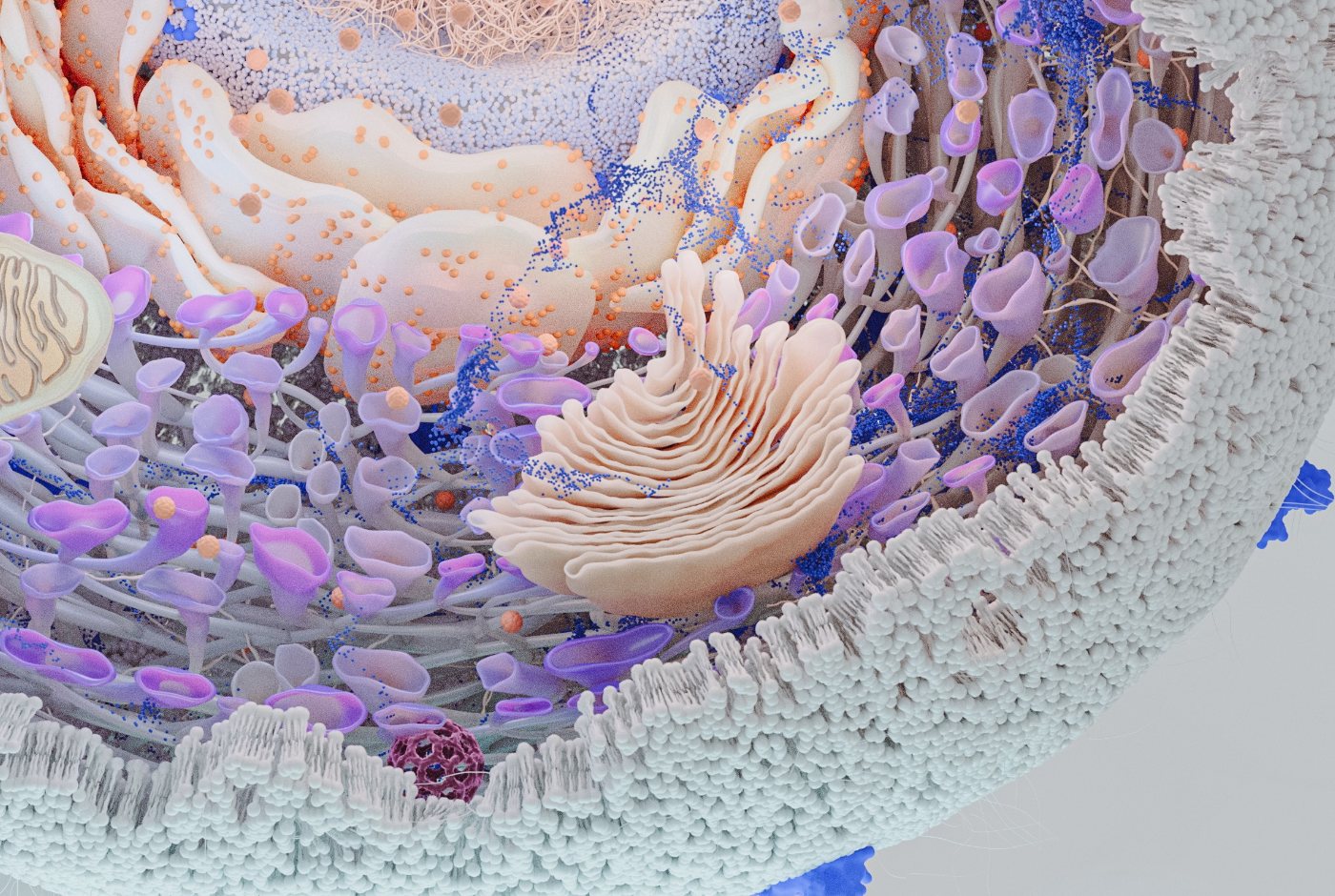
Golgi apparatus detail in a cell render
  • ICTPrivate non-profit civil association
  • 02Sites: Hortolândia (SP) and Arraial do Cabo (RJ), Brazil
  • 03Audiences: private sector, government and third sector

Areas of work

01

Health

  • CAR-T therapy for adult and pediatric leukemias and lymphomas
  • Clinical, pharmacoeconomic, biosimilarity and bioequivalence studies
  • Herbal medicine platform with agricultural producers
  • New solutions based on cell therapy
02

Agriculture

  • Microbiology and bio-inputs
  • Biological control of pests and diseases
  • Efficacy testing and new product development
  • Artificial intelligence for operational risk measurement
03

Environment

  • In vitro protocols for Amazon and Atlantic Forest seedlings
  • Seedling traceability
  • Carbon footprint measurement systems
Next step

The goal is not to automate science. It is to give ICT Biomas an infrastructure to produce better organized science, more defensible decisions and technologies more ready to advance.

BioSphere creates a common operating language across science, development, management and technology transfer.